
Prepare the actor role
Use the supplied account, concerns and disclosure instructions to respond consistently during the rehearsal. The candidate can concentrate on asking and explaining without seeing the partner’s instructions.
A guide to colleague rehearsals
Agree what you want to practise, keep each person’s role information separate and make time for feedback. This guide shows how to run a colleague session using FlyteX OSCE Academy.
The respiratory history example below uses a free sample station. An account is required to open it.
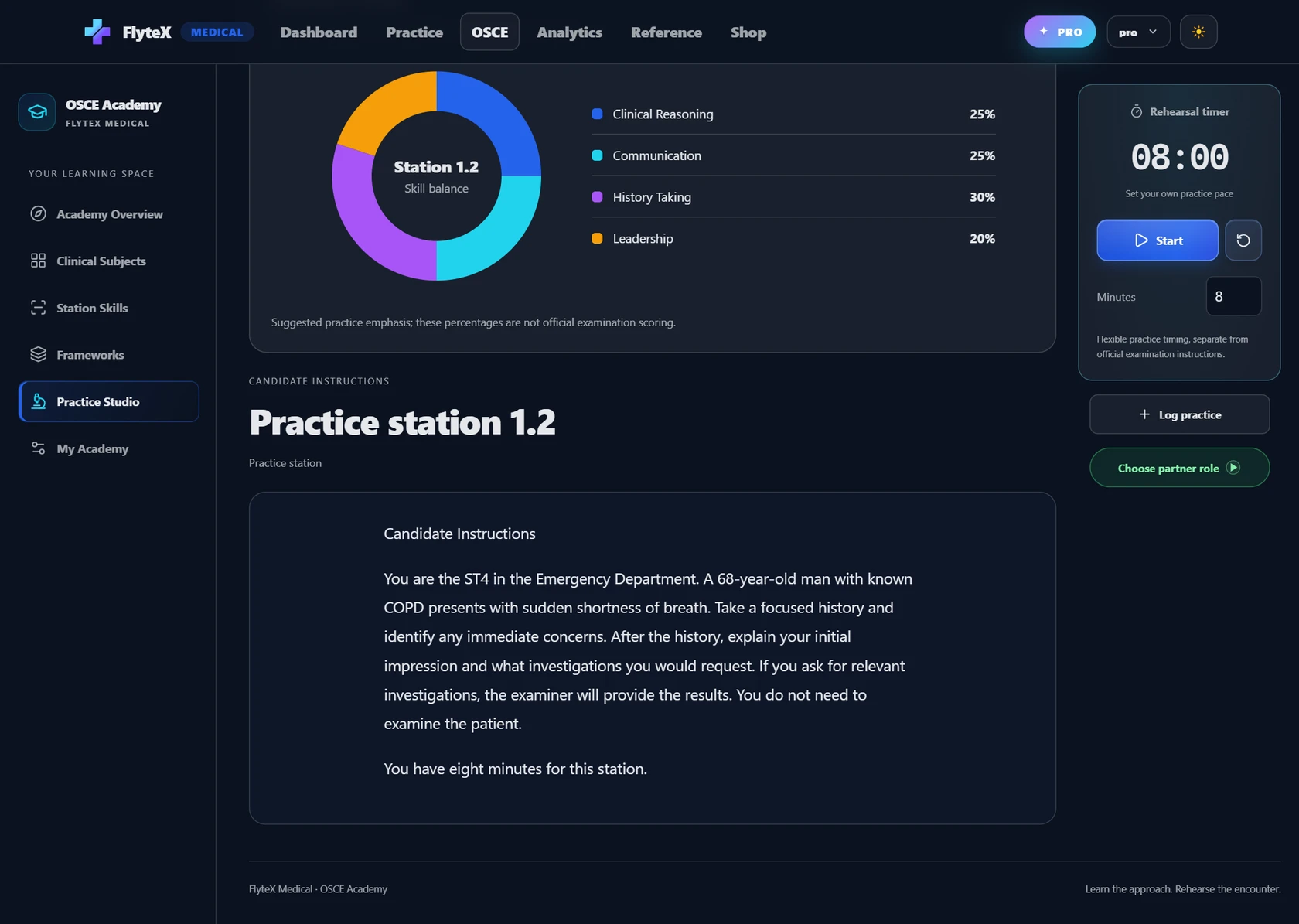
Before you begin
For a respiratory history rehearsal, you might focus on making the presenting symptoms specific, exploring their effect on the patient and giving a clear summary. Read the related lesson first if you need to refresh the approach.
Agree the aim with your colleagues. Give the observer something concrete to watch for, such as whether the summary reflects the patient’s concerns and supports your proposed next steps.
A worked rehearsal routine
Use this sequence for a respiratory history session, then adapt it to the task you choose next.
Review the respiratory history lesson and a history-taking framework. Decide how you will move from the opening concern to focused questions, a summary and an explanation of your thinking.
Choose a single aim for the attempt. For example: “My summary should explain the main concern and the information that changes what I would do next.”
The candidate reads the task and supplied material. The colleague playing the patient or scenario partner prepares the actor instructions. The observer reviews the station guidance before the attempt begins.
Keep the actor and observer information on their own screens so the candidate can practise discovering and interpreting what is relevant during the encounter.
Set the adjustable rehearsal timer to the pace you have agreed. Work through the task while the actor responds according to the supplied account and the observer notes specific examples of the candidate’s approach.
The timer is a practice aid. Use the current instructions for your actual examination when planning exam timing.
Start with the candidate’s reflection, then ask the actor what was clear and how the conversation felt. Use the observer guidance and debrief to compare what happened with the task’s expectations.
Make feedback specific: “You explored the effect on daily activities, but it was missing from your summary” gives the next attempt a clearer focus.
Log the rehearsal and your role in My Academy. Save one useful point to revisit, return to the relevant teaching and run another attempt. Swap roles or agree a variation for a subsequent rehearsal to test how you adapt.
Each colleague has a job to do
Select a screenshot to explore the actual role screens. Read the private role material separately before handing the candidate their brief.
Use the supplied account, concerns and disclosure instructions to respond consistently during the rehearsal. The candidate can concentrate on asking and explaining without seeing the partner’s instructions.
Use the observer guidance and mark scheme to structure the discussion. Note examples from the attempt so feedback identifies something the candidate can retain or change.
A journal entry can be short: the station, the role you played and one point you want to test again. For this rehearsal, that could be checking whether your final summary includes both the relevant clinical information and the patient’s main concern.
My Academy keeps your lessons, frameworks and practice entries together. Before the next session, use that record to choose whether to revisit the same task, rotate roles or work on another subject.
Three people can take candidate, actor and observer roles. With two, take candidate and actor roles, then discuss the attempt together using the guidance afterwards. Rotate roles between attempts so each colleague has a chance to practise.
That depends on your aim. Read the lesson first when you are developing an approach. If you want to explore what you can already do, attempt the station and then return to the teaching in response to the feedback.
The rehearsal timer is adjustable so you can choose a pace for the session. Check the current examination instructions for official timings and task requirements.
The observer can prepare with it before the attempt, note specific behaviours during practice and use it with the debrief afterwards. Discuss what was covered, what needs work and which change to test on the next attempt.
Create a free account or sign in to open the sample candidate brief and explore the rehearsal workflow. Full Academy access is included with Pro.